


Spotlight On - Bronwyn Cochrane & Deborah Hoger and the National First Nations Education Conference
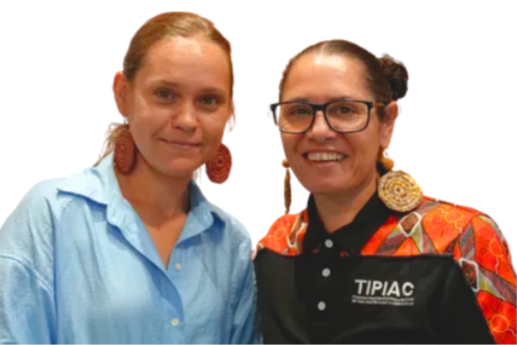
Bronwyn Cochrane, proud Gamilaraay yinaar, teacher, and founder and CEO of Teaching Indigenous Perspectives In the Australian Curriculum (TIPIAC), and Deborah Hoger, Dunghutti woman and founder of Riley Callie Resources, lead First Nations education businesses dedicated to helping schools and early learning services embed First Nations perspectives with authenticity and accountability. The Narragunnawali team spoke with Bronwyn and Deborah to find out more about their approach to reconciliation practice — and the inaugural National First Nations Education Conference they are joining forces to host.
Authentic and culturally respectful resources
Deborah Hoger, Riley Callie Resources
For us, ‘authentic’ and ‘culturally respectful’ aren't marketing terms, they are responsibilities. We prioritise working directly with First Nations educators, cultural knowledge holders, artists and small businesses. Where cultural stories, perspectives or frameworks are included, they are either created by First Nations contributors or developed in consultation with them. Australia is not a single First Nations culture, and part of authenticity is acknowledging that diversity. We work hard to access resources from all over Australia and from many different Nations. We continually review, because language evolves, community expectations evolve, and our responsibility is ongoing, not a one-off tick-box exercise.
Learning journeys when embedding First Nations perspectives
Bronwyn Cochrane, TIPIAC
For many schools, the journey begins with uncertainty. Educators often want to do the right thing but are afraid of getting it wrong or unsure where to begin. My role is to help move them from fear and tokenism into confidence, depth, and authenticity — building their cultural understanding first, then showing them practical ways to embed First Nations perspectives across teaching and learning. When it takes hold, you can see the shift: staff begin thinking differently, students engage more deeply, and First Nations perspectives stop being treated as an add-on and start becoming part of the way the school teaches, reflects, and relates.
Choosing, using and evaluating First Nations resources in the classroom
Deborah Hoger, Riley Callie Resources
Getting it right isn't about perfection, — it's about intention, reflection and consistency. Choosing First Nations resources isn't just about finding something with Aboriginal artwork on the cover. Ask: Who created this? Whose voice is being centred? Does this present First Nations peoples as diverse, contemporary and resilient? Getting it right looks like embedding perspectives across the year, not just during NAIDOC Week or National Reconciliation Week, and modelling humility. Educators don't need to position themselves as experts in culture, — they can be learners alongside their students. When teachers approach this work with openness and respect, students notice, families notice, and that shapes classroom culture more than any single resource.
The importance of a whole-school approach
Bronwyn Cochrane, TIPIAC
Reconciliation cannot sit in one lesson, one event, or one passionate staff member. It has to live in the culture of the school, — in leadership, curriculum planning, relationships, policy, and the way community is engaged. If schools take shortcuts, they often end up with tokenistic activities or resources used without the depth, context, or accountability needed to do this work well. That can cause harm, even when intentions are good. Real change happens when schools are willing to slow down, listen, build trust, and commit to doing the deeper work over time.
Collaboration and stronger partnerships
Bronwyn Cochrane, TIPIAC
Meaningful collaboration is grounded in shared purpose, mutual respect, and the understanding that no one organisation holds all the answers. Deborah and I bring different strengths, and together that creates something richer for educators. Our upcoming National First Nations Education Conference reflects that vision — ensuring First Nations educators, practitioners, cultural knowledge holders and businesses are centred in the national education conversation. As First Nations-led organisations, it models for schools what it looks like when First Nations voices are not on the sidelines, but leading from the centre.
Deborah Hoger, Riley Callie Resources
Partnership reflects the very principles we hope schools will embody: listening first, valuing diverse knowledge systems, and recognising that stronger outcomes emerge when perspectives are brought together. I hope our collaboration models that this work is not competitive — when we work collectively, we strengthen impact. Bronwyn and I are both all in when it comes to making a difference in the education sector, and the conference is a way we can bring educators, teachers and First Nations knowledge holders along this journey with us.