



Teacher Feature – Andrew Brodie from Deadly Coders
Andrew Brodie was working in private sector digital technologies education when the idea for Deadly Coders, a First Nations led not-for-profit, took shape. As a former teacher in the Queensland public system, he had seen firsthand what was missing — and what was possible. Together with a small group of close friends and colleagues, he co-founded Deadly Coders with a bold ambition: to deliver engaging digital technologies education and training to every Aboriginal and Torres Strait Islander student in Australia within the next ten years.
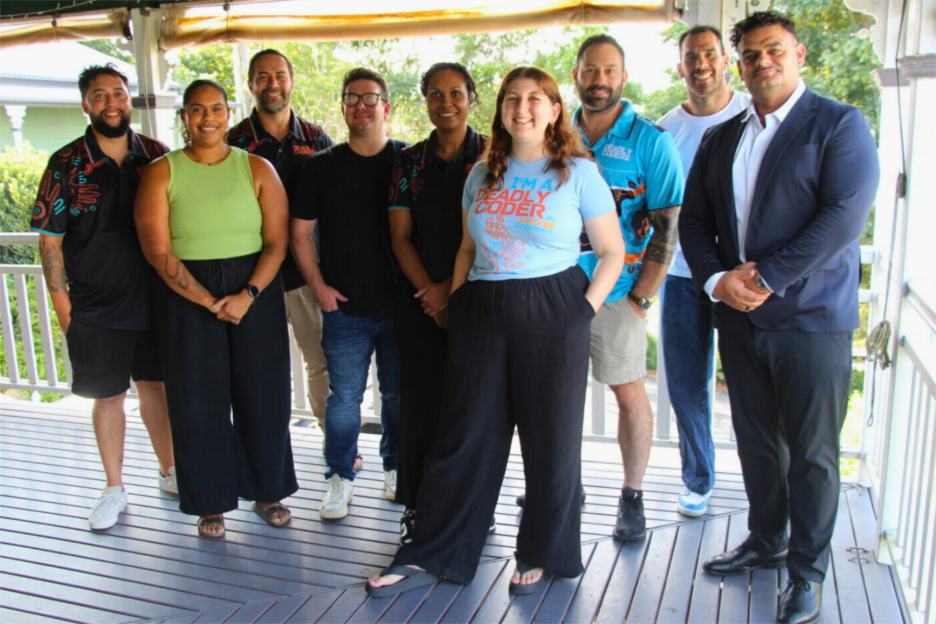
Based on Turrbal and Yuggera Country in Meanjin (Brisbane), Deadly Coders has already reached over 10,000 First Nations students across the country through online and face-to-face programs spanning STEM workshops, coding academies, cyber security challenges, and school programs.
For Andrew, the significance of this work extends well beyond the classroom and into the broader community as a key driver of reconciliation. ‘Access to quality culturally grounded technology education will open up pathways and access to the digital economy’, he says.
Central to Deadly Coders' approach is the principle of connection before content. The team encourages educators to understand their students as individuals, to ask about their communities, languages and interests, and to adopt a strengths-based approach that embraces hands-on, visual, collaborative and story-based learning. Cultural responsiveness, Andrew emphasises, is the first priority, not an afterthought.
That philosophy came to life vividly during a program delivery on Thursday Island, where a Year 3 student — new to the community and navigating English as an additional language — began the session withdrawn and uncertain. By the end of the workshop, and with the encouragement of a Deadly Coders Board Member who shared cultural connection, the student was running around the classroom declaring to everyone:, ‘I'm a genius!’
‘Moments like that change you,’ Andrew reflects. ‘When students feel seen, understood, and supported in a culturally safe environment, their confidence can grow in ways that go far beyond the classroom.’
His call to action for every school and early learning service is clear and direct: implement compulsory training in culturally responsive practice for all staff. Understanding the history and context of your students, he says, is the essential first step in building the cultural capacity that makes genuine change possible.
To learn more visit: